Someone looking at our books and our film for the first time might as well ask how we got started down this particular path.
The roots of Humane Exposures go back 15 years and begin with Susan Madden Lankford’s interactions with the homeless. Having managed a successful portrait studio for years, she has decided that she wanted to do more. Renting the Seaport Village Jail, she then began photographing the homeless and collecting their narratives. Since many of those had involved incarceration, it was only natural that Lankford’s next step be touring the seven main jails in the area.
That tour brought her to Las Colinas, the county’s only all-women jail. It was then that Lankford has realized that prison reform is urgently needed, and decided to share the inmate’s situation with a the public in hopes of spurring that reform.
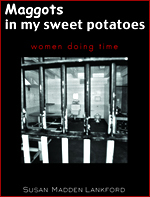
Mark Arner, a reporter for The San Diego Union Tribune, reported on the resulting book, Maggots in My Sweet Potatoes (also on Facebook) back when it was released in 2008:
Thirteen years ago, an inmate at the county’s only all-female jail said something startling to San Diego photographer Susan Madden Lankford.
‘Hey Susan, I have something to tell you: I found maggots in my sweet potatoes last week,’ Lankford said the inmate told her.
While her subsequent tour of the jail’s kitchen facilities revealed only clean surfaces and safe food, that one comment stuck with Lankford and became the title of the book. Here is Arner’s brief description of the book from the same article:
The 284-page book describes how Lankford obtained Kolender’s permission for the project in the mid-1990s. Primarily in 1995 and 1996, she conducted interviews and took black-and-white photographs of inmates, guards and jail overseers.
The book features 326 of those images, as well as journal entries and letters from several inmates from 1997 to 1999, research on domestic violence and drug and alcohol abuse, and a section on white-collar crime.
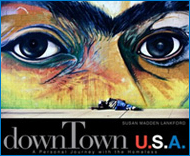
Since then, we have released a book of Lankford’s homeless photography, downTownUSA: A Personal Journey with The Homeless, and have even branched out into the realm of video with our documentary, It’s More Expensive to Do Nothing. All of these projects relate to an interelated set of issues:
- Incarceration is often a factor in homelessness.
- Education and early home life have a huge influence on children and are negative early environments, often contributing to the future criminal activity.
- Patterns of abuse and neglect cycle through generations.
- If we shift our societal focus to actual rehabilitation into society, we can not only impact homelessness but also greatly reduce the state expenditures incurred. For example, if homeless people had access to health care, it would cut millions in emergency services costs accrued over the course of a year.
Later this year we will be releasing Born, Not Raised: Kids at Risk, in which we will explore the troubled psyches of youngsters serving time in juvenile hall. Without education and other humane assistance, many of these youth will be caught in the revolving door of institutionalization.
All of these projects relate to each other and, taken together, try to present, one aspect at a time, the complex and interrelated nature of the societal breakdowns they address.
So, tell us, how did you discover Humane Exposures, and when? We’d love to know!
Source: “A Portrait of Jail Life,” The San Diego Union Tribune, 09/23/08
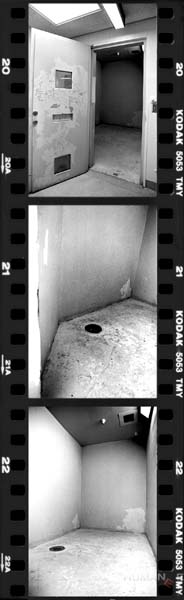
Image copyright Susan Madden Lankford, from the book “Maggots in my Sweet Potates: Women Doing Time.” Used with permission.
Visit Us on Facebook: Humane Exposures Publishing, downTownUSA, Maggots in My Sweet Potatoes, It’s More Expensive To Do Nothing.

 Here at HUMAN
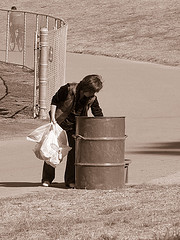 We live in an amazing age, the age of information, which has a direct and palpable impact upon the issues we try to address. One great example is homelessness, a major focus of the works we produce. Not only is social media an excellent tool for educating the populace about the problem, but it can also give a voice to those who are experiencing it.
 HUMAN
HUMAN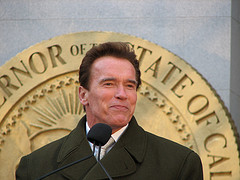 The campus of Vista Del Mar Child and Family Services last Wednesday was the epicenter of an enormous change for California. Governor Schwarzenegger performed a ceremonial signing of Assembly Bill 12, a bill that will keep foster care kids from aging out of the system when they turn 18. Schwarzenegger called the idea of taking care of oneself at 18 “ludicrous.”
 Most people just walk right by the homeless. People living on the street are often viewed as the detritus of society, failed lives with no potential for betterment. Not to say that everyone feels this way, but there is a large segment of the population that does.
 It was not all that long ago that we wrote about a
  Mark Allen Johnson started shooting images in 2003. Since then, he has done photography for a stunning array of clients including Newsweek, Time, The New York Times, Marie Claire, The Economist, and VIBE. In addition he, like all photographers, pursues his own projects. It is one of those we’d like to speak of today: Pregnant in Prison.
 An oft recurring theme on the HUMAN
 The homeless are particularly vulnerable to violence and crime. Exposed on the street without shelter, they make appealing targets for the distorted personalities that prey on others. Recently, attacks on the homeless have been on the rise, and it’s finally drawing the attention of those in power.